Actionable Guides and Tips for Successful
Offshoring to The Philippines
Scaling Offshore Teams Without Losing Control
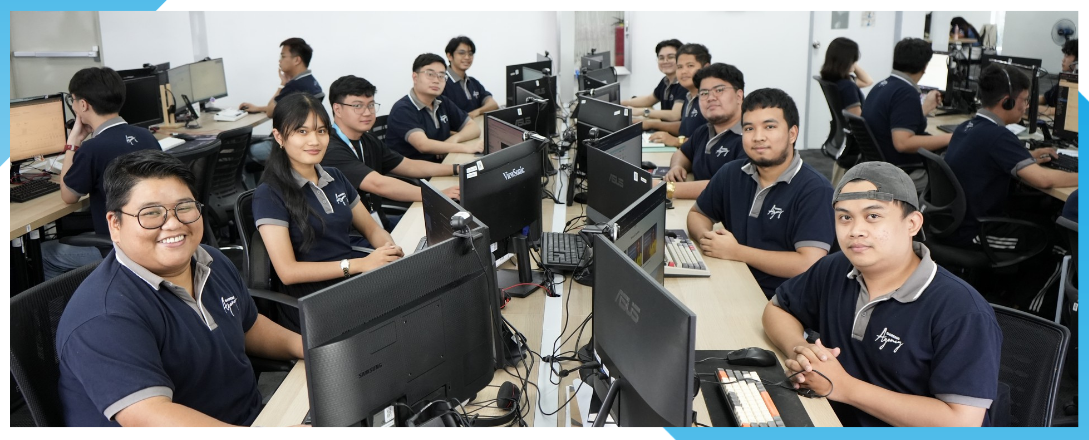
As businesses scale offshore in the Philippines, speed often takes priority over structure. Teams of engineers, eCommerce specialists, accountants, and support staff are hired quickly to meet immediate needs—but without a long-term workforce strategy, these fast hires rarely translate into stable, scalable teams.
Reactive offshore hiring carries hidden costs. High turnover, knowledge gaps, and inconsistent performance force repeated recruitment cycles. Projects stall, leadership time is consumed by operational firefighting, and institutional knowledge erodes. Gradually, the cost savings that justified offshoring in the first place begin to vanish.
Building a sustainable offshore talent pool flips this model. Instead of reacting to vacancies, businesses proactively identify, assess, and develop talent aligned to future roles, company culture, and growth plans. The payoff: faster hiring, stronger role fit, higher retention, and predictable scale.
With the right partner, offshore teams become a strategic advantage, not a recurring headache. Shore360 helps businesses in the Philippines design offshore teams built for continuity, performance, and long-term growth—not short-term fixes.
Why Offshore Teams Break and What Clients Really Need
Most businesses don’t struggle with starting offshore—they struggle with what happens after the first hires. Initial roles are filled quickly, productivity ramps up, and cost savings look strong. Then the cracks appear.
Clients face familiar pain points:
- Attrition becomes a cycle: Losing trained staff triggers repeated recruitment and onboarding.
- Knowledge is concentrated in a few individuals: When key team members leave, critical context and momentum vanish.
- Managers are overextended: Leadership focuses on fixing operational gaps rather than driving growth.
- Scaling feels like starting over: Every phase of growth triggers the same hiring, training, and alignment challenges.
The problem isn’t a lack of talent—it’s a workforce model built for speed, not sustainability. Offshore teams need structure to grow; without it, reactive hiring becomes expensive, risky, and exhausting.
What a Sustainable Offshore Talent Pool Looks Like

A sustainable offshore talent pool isn’t just a database of CVs. It’s a deliberately built pipeline designed for continuity, capability, and scale.
Key priorities include:
- Readiness: Pre-qualified, role-aligned candidates available before demand spikes.
- Alignment: Selection based on capability and long-term cultural fit.
- Longevity: Clear career progression paths that anchor retention and engagement.
This approach compresses hiring timelines without sacrificing quality, strengthens retention, and allows knowledge to compound instead of reset. As offshore teams increasingly support core business functions—not just transactional support—these factors become non-negotiable.
Why the Philippines Still Works—When Done Right
The Philippines remains one of the strongest environments for long-term offshore teams—but only when businesses move beyond transactional hiring.
Critical advantages include:
- Depth across professional roles: From engineering to eCommerce, finance, design, and technology, experienced talent operates effectively in global environments.
- Strong English proficiency: Clear communication supports performance, collaboration, and client-facing work.
- Cultural alignment with Western business practices: Accountability, responsiveness, and teamwork accelerate onboarding and integration.
- Career-oriented workforce mindset: Professionals value stability and progression. Position offshore roles as careers, and retention improves.
- Established offshore infrastructure: Hubs like Metro Manila, Clark, and Cebu provide scalable talent and modern facilities.
The Philippines supports repeatable, long-term workforce planning, not just one-off hires. Success depends on how talent is engaged, structured, and retained—not geography alone.
The Cost of Transactional Offshore Hiring

Transactional offshore hiring focuses on speed and price. The real costs surface later:
- Cyclical attrition, triggering repeated recruitment and onboarding
- Uneven performance, increasing reliance on onshore managers
- Leadership time spent on operational recovery instead of growth
- Lost institutional knowledge, particularly in specialist roles
For functions like engineering, eCommerce, and finance, these challenges compound. Offshore teams that rotate frequently slow down velocity and erode confidence in the model.
Most offshore initiatives fail to scale not because talent is unavailable, but because the system isn’t designed to last.
Foundations of a Sustainable Offshore Team

Deliberate planning transforms offshore teams from fragile to dependable. Core foundations include:
- Employer-led recruitment: Hiring driven by long-term business needs, not short-term availability.
- Forward workforce planning: Building pipelines for future roles and skills before urgency hits.
- Structured onboarding and development: Upskilling and progression pathways reduce attrition.
- Retention through engagement and accountability: Clear expectations, feedback, recognition, and leadership visibility matter more than perks.
- HR and compliance infrastructure: Proper contracts, payroll, and local HR support ensure trust and stability.
- Continuity of management: Consistent leadership maintains alignment as teams grow.
When these elements are in place, offshore talent pools self-reinforce—hiring becomes faster, retention improves, and scale is predictable.
How Shore360 Builds Offshore Teams That Endure

Shore360’s model is designed for businesses that are past experimentation and ready for offshore maturity.
Employer-Led Recruitment
Roles are clearly defined, and candidates are assessed for skill and cultural fit.
Outcome: Reduced mis-hires and faster integration.
Dedicated HR and Compliance Support
Local employment, payroll, and statutory compliance are fully managed.
Outcome: Stable employment without client-side operational burden.
Continuous Training and Development
Onboarding and role-specific upskilling grow capabilities without constant rehiring.
Outcome: Institutional knowledge is retained and strengthened.
Retention-Focused Workforce Strategy
Engagement, performance management, and leadership visibility are built into operations.
Outcome: Predictable performance and lower attrition.
Scalable Talent Pipelines
Pipelines maintain future growth without restarting recruitment.
Outcome: Controlled scaling without quality erosion.
Together, these elements form a system, not a collection of services, delivering compounding value over time.
Scaling Offshore Teams Without Compromising Quality
Sustainable talent pools change how offshore scale happens:
- Time-to-hire shortens without quality trade-offs
- Onboarding and performance standards remain consistent
- Leadership load decreases as recruitment pressure drops
- Institutional knowledge anchors new hires
Scale strengthens capability instead of diluting it. Offshore teams mature into dependable engines of growth rather than fragile extensions.
From Offshore Hiring to Offshore Advantage

The difference between teams that break and teams that scale is structure.
When offshoring is treated as a strategic workforce investment, not a hiring shortcut, teams become stable, resilient, and high-performing.
Shore360 helps businesses move beyond reactive hiring to build offshore teams in the Philippines that endure, grow, and deliver real advantage.
Ready to stabilise and scale your offshore team? Contact Shore360 and start building a team that lasts.